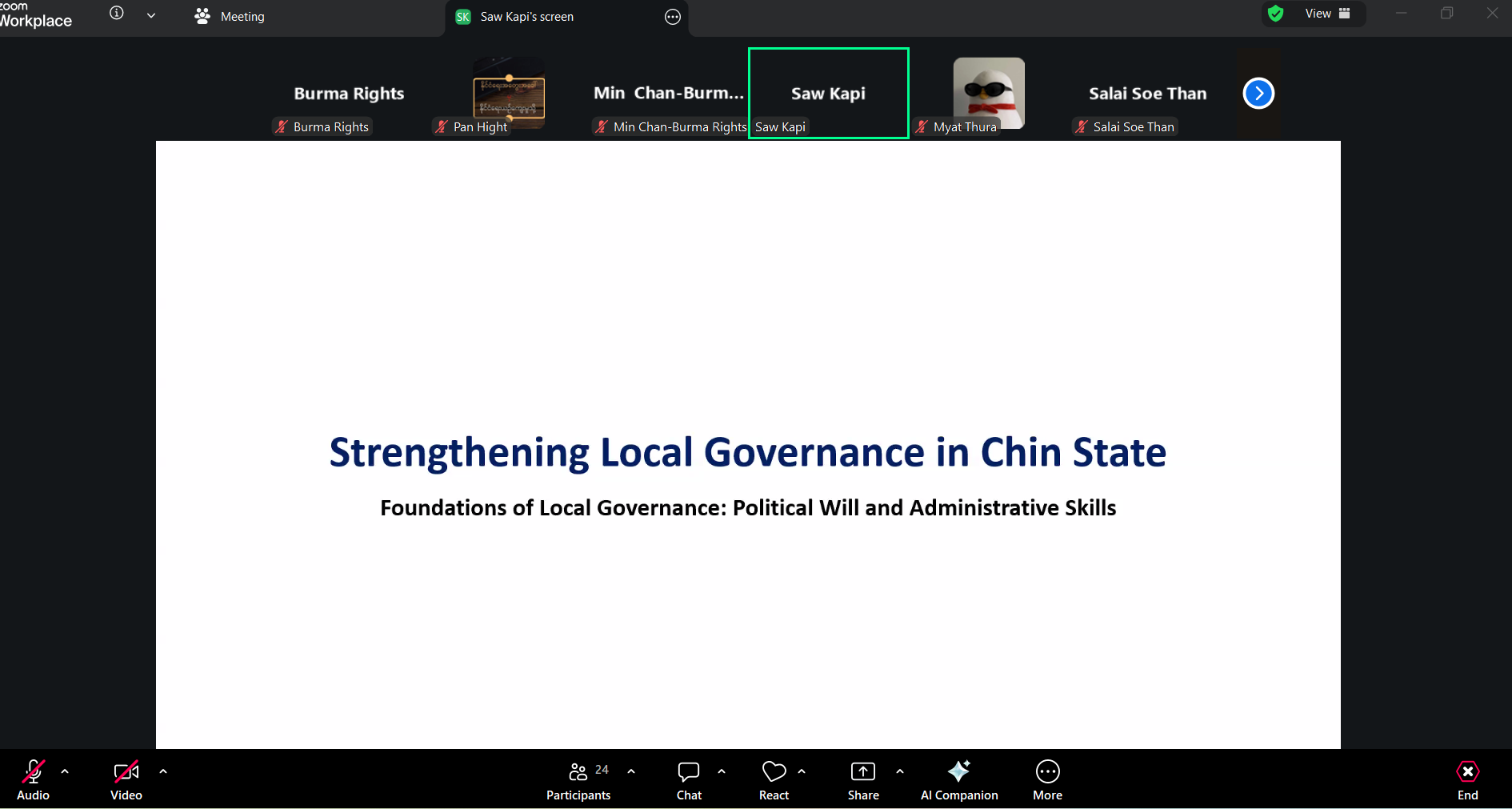
Strengthening Local Governance in Chin State
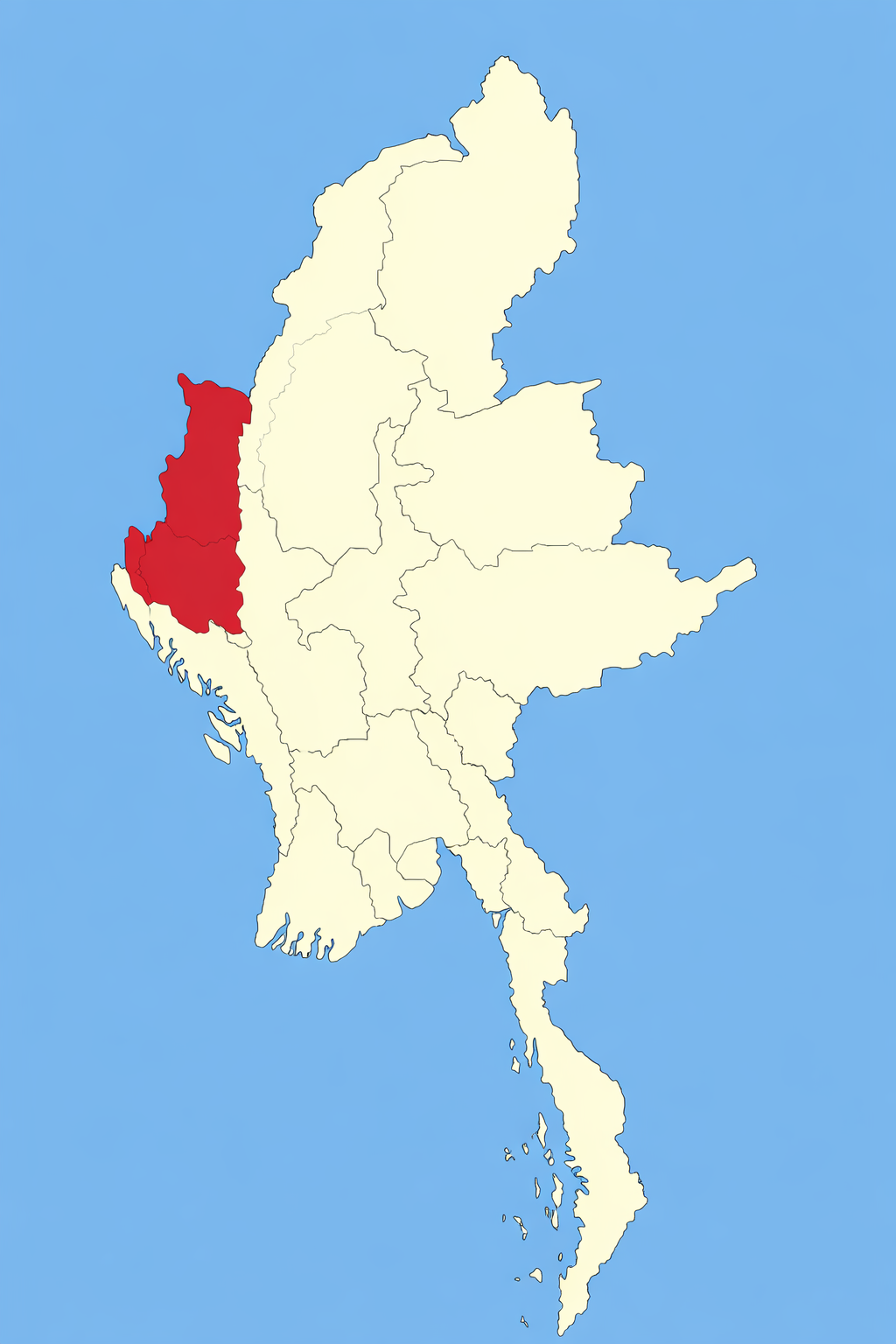
Local Governance Challenges in Chin State
Local governance in Chin State faces significant challenges due to ongoing conflict, political fragmentation, and limited institutional capacity. The emergence of multiple governance actors including Ethnic Resistance Organizations (EROs), Civil Disobedience Movement (CDM) administrators, and community-based organizations has created a complex and often uncoordinated landscape regarding authority and service delivery.
Many local actors lack formal training in inclusive governance, participatory planning, and accountability mechanisms, while communities remain marginalized from decision-making processes. Furthermore, gender disparities, displacement, and limited access to reliable information continue to undermine the legitimacy and effectiveness of local governance structures.
Without targeted capacity-building and coordination support, local governance actors risk reinforcing exclusion, deepening mistrust, and missing opportunities to build resilient, rights-based governance systems that reflect the needs and aspirations of Chin communities.
This initiative seeks to address these gaps by equipping local actors with the knowledge, tools, and collaborative frameworks necessary to foster inclusive, transparent, and accountable governance in Chin State.
Program Overview
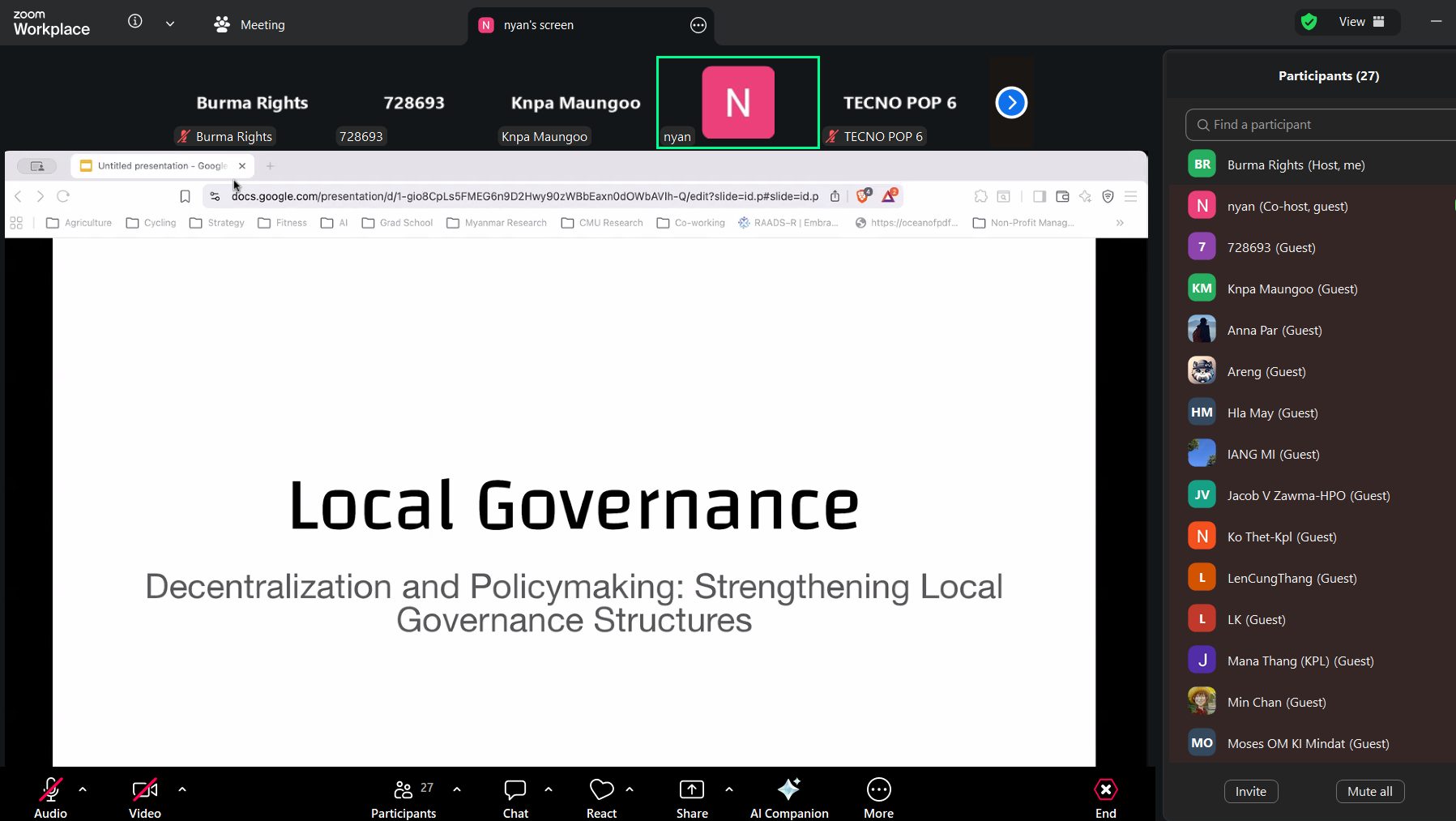
In this context, Burma Rights (BR) successfully implemented the "Local Governance Strengthening Workshop" in Chin State, Myanmar, under the Strengthening Local Governance Program. The program ran successfully from December 26, 2025, to January 1, 2026.
Township administration committees and councils from across Chin State were invited to participate. The workshop included members from administrative bodies under the Chinland Government and the Interim Chin National Consultative Council/Chin Brotherhood (ICNCC/CB). However, some townships were unable to respond due to active armed conflict, and air strikes by the Myanmar military during the event period.
The Minister of Home Affairs of the Chinland Government, along with other leaders, fully cooperated with the invitation process. Without their support, reaching many townships would have been difficult given the security situation and the timing of the Christmas holidays.
Training Objectives
The workshop aimed to:
Enhance the capacity of local governance actors (including EROs, CDFs, CSOs, and community leaders) to engage in inclusive and accountable governance.
Promote civic engagement and participatory decision-making in conflict-sensitive environments.
Strengthen coordination between formal and informal governance structures.
Integrate gender equity, human rights, and peacebuilding principles into local governance practices.
Program Design
Designed as an intensive workshop, the program sought to:
Enhance local governance tools and skills.
Share learning experiences based on international best practices and lessons learned from Karenni State.
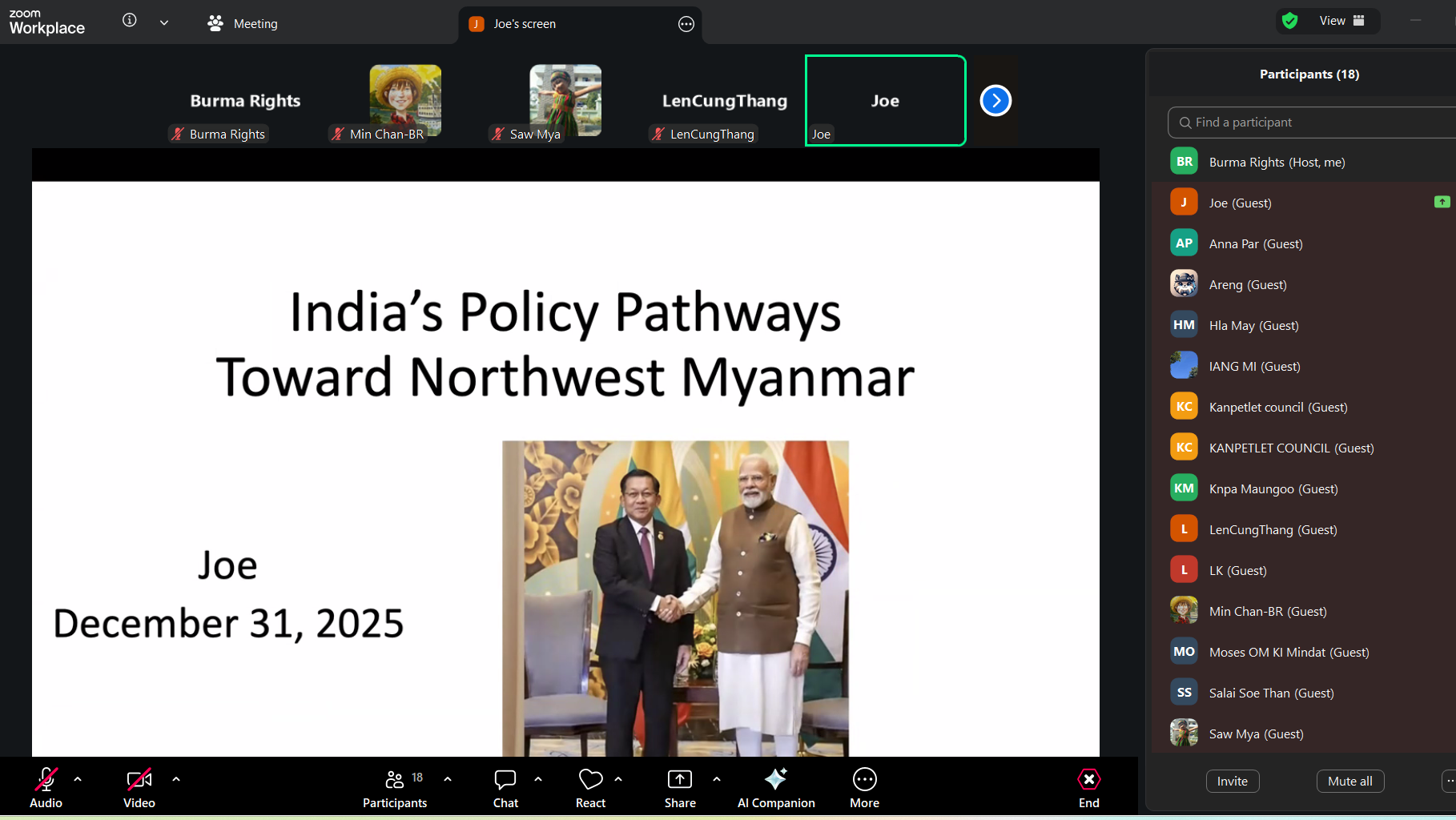
Provide an overview of the post-2021 military coup governance landscape in Chin State and its interaction with India's policy approach toward Myanmar, particularly in the northwest region.
Explore how peacebuilding can be linked to local governance initiatives.
Enhance gender inclusion within local governance structures.
Trainers were experts from the local governance sector, representing different state and backgrounds. They included professionals working at the policy and advocacy levels, as well as academics currently involved in local governance bodies.
Participation and Gender Inclusion
Although originally planned for 20–25 participants, the workshop ultimately attracted 31 attendees. Participants included representatives from township administration bodies, CSOs, women's groups, CDM members, several ministers from the Chinland Government, and members of the ICNCC/CB.
Gender equality and social inclusion are top priorities for Burma Rights in all project implementations. Consequently, BR engaged three female trainers out of a total of seven. Throughout the participant selection process, the team consistently encouraged the participation of women and youth. As a result, 11 of the 31 participants were women.
Male-dominated cultural norms are deeply rooted in the Chin community. This workshop helped amplify women's voices, providing participants with the opportunity to learn from female perspectives on local governance issues. Understanding gender inclusion is essential for effective policymaking, the peace process, and the strengthening of local governance in Chin State.
Voices from the ground:

"Having been able to systematically study peacebuilding and local administration, including local governance systems, budget issues, gender matters, sharing of experiences from Kayinni State, along with sharing India's policies relevant to Chin State, all of this proved to be extremely beneficial."
“ဒေသန္တရအုပ်ချုပ်ရေးစနစ်အပါအ၀င် ချင်းပြည်နယ်၏ အခြေအနေများ၊ ဘတ်ဂျတ်ကိစ္စရပ်များ၊ ဂျန်ဒါကိစ္စရပ်များ၊ ကရင်နီမှ အတွေ့အကြုံများကိုပြန်လည်မျှဝေပေးခြင်းတို့အပြင် ချင်းပြည်နယ်နဲ့ ထိစပ်နေသော ချင်းပြည်နယ်အတွက် အိန္ဒိယနိုင်ငံပေါ်လစီများအား ထည့်သွင်းမျှဝေပေးခြင်း၊ ငြိမ်းချမ်းရေးတည်ဆောက်ခြင်းနှင့် ဒေသအုပ်ချုပ်ရေးတို့အား အစီအစဥ်တကျ လေ့လာခွင့်ရရှိခဲ့ခြင်းသည် အင်မတန်မှ အကျိုးဖြစ်ထွန်းစေခဲ့ပါသည်”

"As those of us serving on the local administration teams are facing many weaknesses, the insights gained from this workshop and the opportunity to learn about other important matters have been extremely helpful to us.”
“မြေပြင်တွင် အုပ်ချုပ်ရေးအဖွဲ့တွင်ပါဝင်နေသူများအနေဖြင့် အားနည်းချက်များစွာရှိတာမျိုး ကြုံနေရသည့်အတွက် အခုလိုအလုပ်ရုံဆွေးနွေးပွဲမှရရှိသည့် အကြံဉာဏ်များ၊ အခြားသော အကြောင်းအရာများအား လေ့လာသိရှိရသောကြောင်း မိမိတို့အတွက် အများကြီးအထောက်ကူဖြစ်စေပါသည်”

"We would like to request Burma Rights to continue organizing workshops to help strengthen local public administration systems."
“ဒေန္တရ ပြည်သူ့အုပ်ချုပ်ရေးစနစ်များ ပိုမိုအားကောင်းလာနိုင်ရေးအတွက် Burma Rights ဖက်ကို အလုပ်ရုံဆွေးနွေးပွဲများ ဆက်လက်လုပ်ဆောင်စေလိုပါသည်”